How To Get Beach Waves UK — £18.99 Clearance Guide
How To Get Beach Waves UK: Triple-Barrel Hair Waver at £18.99. A clearance guide to fit, use case and value.
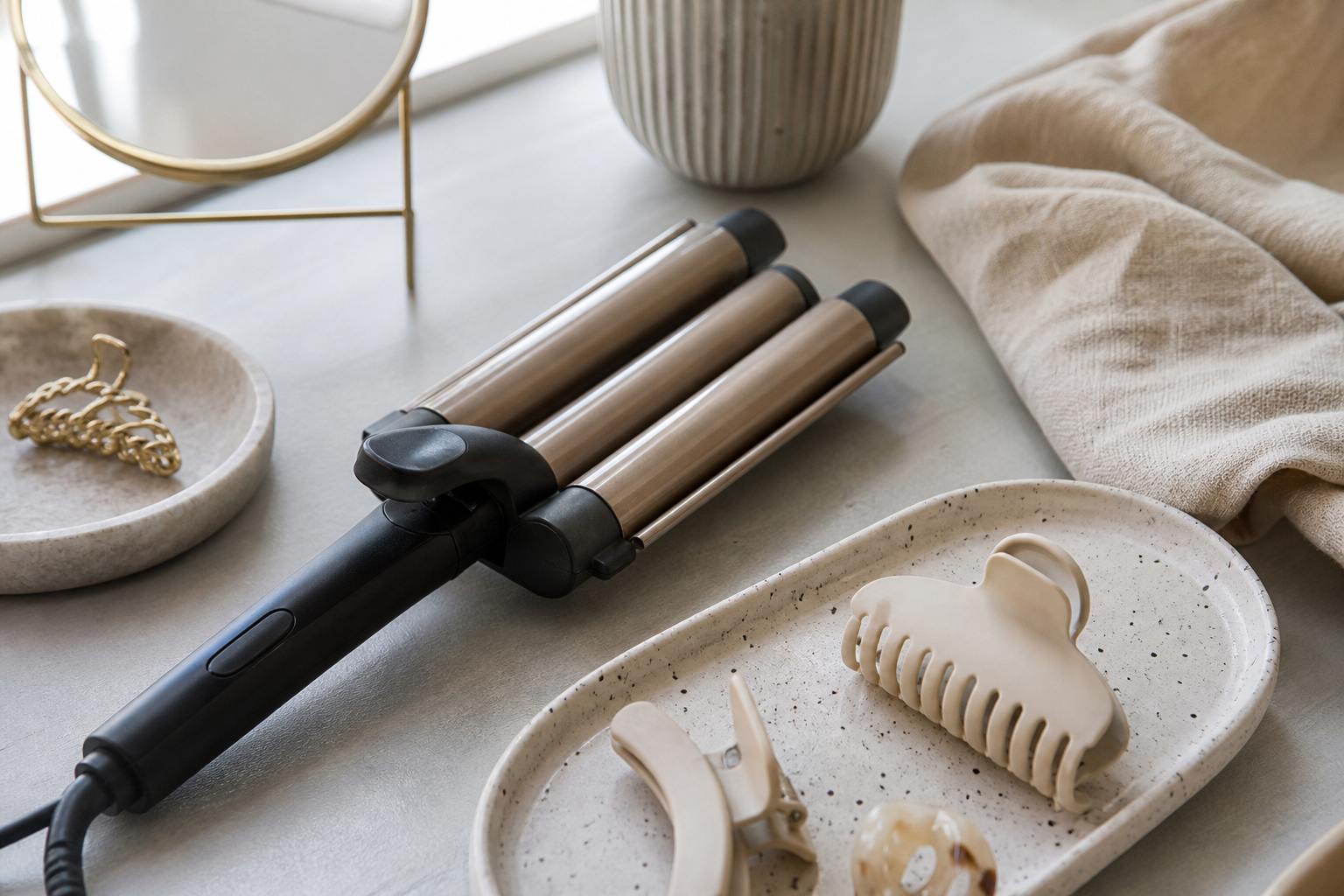
Current clearance price — verified 29 July 2026: £14.99 for the Triple-Barrel Hair Waver. This is the live Shopify-synced price for this article’s product. Product availability, variants and delivery terms remain subject to the live product page at checkout.
Best for: at-home wave seekers who want an affordable single-tool styling option. This guide answers the single search intent “how to get beach waves” first; it does not claim that one product is right for every shopper.
How to get beach waves starts with a method choice — triple waver, curling wand, flat iron, or heatless — then section size, cool-down and how much heat you are willing to use. You do not need to buy a tool to learn the map below. A triple-barrel waver is usually the fastest repeating S-pattern once you decide you want a dedicated clamp; wands and plates still work if you already own them. Clearance pitch comes last, soft, and only for the tool branch.
Not lab-tested on our unit as of 2026-07-24. Guidance is teaching reference / public competitor anchors (accessed 2026-07-24), not a RapidTongs wear-test.
Beach waves methods map
| Method | Look | Speed | Learning curve | Best if… |
|---|---|---|---|---|
| Triple-barrel waver | Even S / ripple | Fast on mid–long hair | Clamp + overlap | You want dedicated beach/mermaid texture |
| Curling wand | Softer bends / light spirals | Medium | Wrap direction | You already own a wand |
| Flat iron / straightener | Piecey S via S-motion | Medium–slow | Wrist control | You only own plates |
| Heatless (rods, robe-tie, braids) | Soft overnight wave | Slow (overnight) | Trial & error | You want to minimise heat |
Glossy defined S-ribbons on social are often labelled “mermaid” — same family, slightly more polished finish. Look-name vs Mermade brand and the cm / angle / overlap delta live on mermaid hair waver. This page stays the full methods atlas.
Method 1 — Triple-barrel waver (parameter-level)
Prep
- Start with dry hair.
- Heat protectant through mid-lengths and ends.
- Rough-dry with a little root volume if your hair goes limp.
Teaching settings (not nameplate)
| Hair type | Temperature (teaching) | Hold time | Section width |
|---|---|---|---|
| Fine / colour-treated | ~160–170°C | 4–6 seconds | ~2cm |
| Medium | ~180°C | 5–8 seconds | ~2–3cm |
| Thick | ~190–200°C | 8–12 seconds | ~2cm (keep small) |
Authoritative teaching table + barrel chart: hair waver — labelled teaching starting point,not a nameplate specification / not medical advice. RapidTongs merchant range is 80–210°C adjustable; full electrical specs: triple barrel waver.
Clamp pattern
- Section the head.
- Place the first clamp at mid-shaft (on short hair, near eyeliner height — hair waver for short hair).
- Hold for your teaching seconds.
- Overlap the next clamp so the S continues; leave ends slightly freer for a softer beach tip.
- Cool fully, then tousle.
Horizontal clamps = cleaner S; diagonal = more undone beach. Full nine-step walkthrough: triple barrel waver.
Method 2 — Curling wand (executable)
- Dry hair + heat protectant.
- Take 3–5cm sections; leave the last 1–2cm of ends out of the barrel.
- Wrap loosely, pointing the wand down for softer bends (tighter wraps read as curl, not beach).
- Alternate wrap direction left/right for less uniform spirals.
- Cool on the section before releasing; brush or finger-rake after cooling.
Slower than a waver for full-head identical ripples, but flexible if a wand is what you own. Mid-barrel wands (~25–32mm equivalent feel) suit beach better than skinny pencil barrels.
Method 3 — Flat iron S-motion (executable)
- Dry hair + protectant; small sections (~2cm).
- Clamp mid-shaft; rotate the iron a quarter-turn away from the face; glide down.
- Reverse rotation on the next piece for piecey bends.
- Keep the iron moving — parked plates leave dents that are not beach texture.
- Cool, then separate with fingers (not a brush while hot).
Great when plates are your only tool; slower for matching S-rails than a triple clamp.
Method 4 — Heatless (executable)
- Start on damp, not soaking hair (towel-blotted).
- Choose path: two loose braids · robe-tie / sock wrap · foam rods / flexi-rods.
- Sleep or leave 6–8+ hours; uncover gently.
- Morning: light mist + scrunch — heavy cream can collapse the pattern.
- Expect softer, less “clamped S” results; UK humidity makes outcomes less predictable.
Best for rest days and for readers whose risk tree lands on minimise heat.
How to get beach waves by hair length
Short (bob / lob)
- Prefer 22–25mm barrels (or wand mid-barrel).
- One or two clamps / wraps per section.
- Skip clamping the root to avoid crush.
- Finger-separate lightly so the bob does not look corrugated.
Medium (collarbone to bra-strap)
- 25mm waver is the everyday sweet spot.
- Two to three overlapping clamps; alternate diagonal angles left/right.
Long
- Waver still wins on speed for all-over texture.
- Keep sections modest or barrels only wave the outer ribbon.
- Second pass on face frames only if mid-lengths dropped.
Hold honesty — no timed lab log yet
We have not logged a timed hold-hour test on this batch as of 2026-07-24. Expect UK damp-commute days to soften waves faster than dry indoor heat; refresh face-frames instead of redoing the whole head.
Reader self-check: note start time after cool-down → check visible S at 2h and 4h under your own humidity → optionally after one commute. That is your number — not a site-wide claim.
Heat damage — minimum honest structure
- Mechanism: Heat + time + wet hair / no protectant raises stress risk (drying, roughness). This is not a medical diagnosis.
- Operating boundary: Always use heat protectant · start on dry hair · use the shortest effective hold · do not repeatedly max-heat the same section.
- Evidence layer (this page): Teaching temperature ceiling + “not a nameplate specification / not medical advice” — we do not invent a relative damage % or claim “won’t damage hair.” Public competitor managed temps (e.g. ghd Wave retail copy often cites ~185°C, materials accessed 2026-07-24) belong in comparison columns only — not as RapidTongs nameplate.
- Next step: Need less heat → Method 4 heatless. Need a dedicated clamp’s electrical facts → triple barrel waver, not a slogan.
Common mistakes when learning beach waves
- Waving damp hair on high heat
- Sections too thick for barrels or plates
- Brushing out waves while they are still hot
- Copying a 32mm glam photo on a short bob without changing barrel size
- Skipping protectant because “it is only a few seconds”
Fix those five before buying a second tool.
How to make beach waves last longer
- Cool completely before touching.
- Avoid heavy oils on freshly waved hair.
- Light flexible spray, not a stiff lacquer helmet.
- Sleep on satin/silk where possible.
- Day-two: mist + scrunch before full reheat when you can.
When a dedicated waver is worth buying
If you style beach or mermaid waves weekly, a 25mm triple barrel usually beats forcing the look from plates alone. Shopping and barrel chart: hair waver. Tool vs wand checklist: hair waver tool.
Soft price reality (tool branch only)
| Tool | Approx UK price (checked 2026-07-24) |
|---|---|
| ghd Wave | ≈ £159 |
| Mermade / BaByliss band | ~£45–£69 |
| RapidTongs 25mm Pro | Live £14.99 (strategy £14.99 not on live PDP) |
Who should not be hard-sold here
- Heatless-only readers — stay on Method 4; no tool CTA needed.
- Readers who only needed mermaid look-vs-brand params → mermaid hair waver.
- Anyone who needs invented hold-hour lab claims — we will not fake them.
Soft clearance note (after method choice)
RapidTongs clears seasonal stock (making room for new lines / last production run) from a UK warehouse (typical 2–4 day delivery, returns supported). Useful once you decide the waver method is yours — not required to learn the techniques above. Cite live £14.99 until ops shows £14.99. While stocks last.
CTA (soft): If you want a mid-size tool for Method 1, see the RapidTongs 25mm Pro and the closed specs on triple barrel waver.
FAQ
What is the easiest way to get beach waves?
For most mid-to-long hair, a triple-barrel waver is the most repeatable. Wand and flat iron work with more technique time; heatless needs overnight patience.
What temperature should I use for beach waves with a waver?
Teaching start: about 160–170°C fine, ~180°C medium, 190–200°C thick — with protectant and short holds. Full teaching table: hair waver.
How do I get beach waves on short hair?
Use a smaller/mid barrel (22–25mm), start mid-shaft, keep sections small. Details: hair waver for short hair.
Do beach waves damage hair?
Hot tools can stress hair. Protectant, lower effective heat and less frequent restyling reduce risk. No honest guide should claim zero damage.
How long do beach waves last?
We have no timed site log as of 2026-07-24. Self-check at 2h/4h. Humidity and touching reduce hold; cool fully and finish lightly.
Beach waves vs mermaid waves — same tutorial?
Nearly the same tool. Mermaid uses neater overlaps and less tousle; beach is looser after cooling. Param table: mermaid hair waver.
Schema hints: FAQPage on the six questions; light Product mention only in soft CTA (live £14.99).